



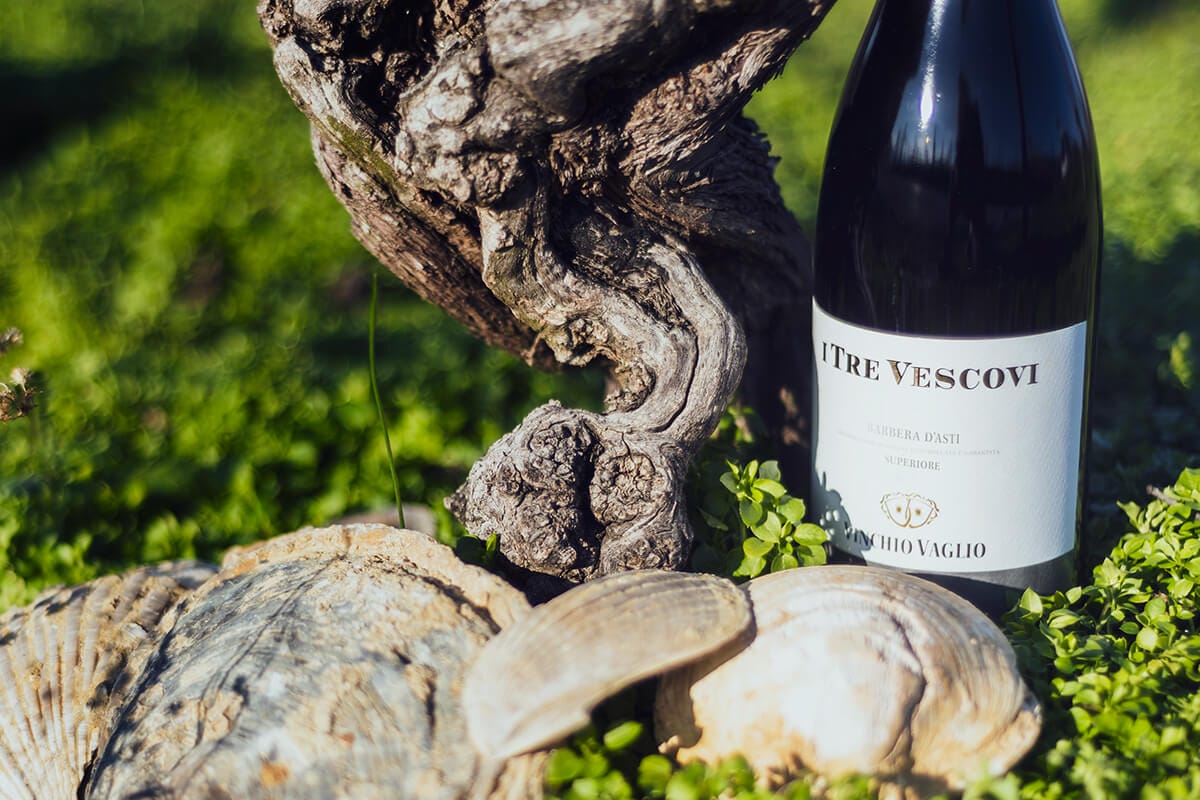
In wine, much like in the region from which it originates, names are never chosen randomly. This Barbera Superiore comes with a longstanding history that finds its roots right here, in the hills of Monferrato.
The birth of a Barbera Superiore
I Tre Vescovi stems from a decision: to create a Barbera Superiore capable of showcasing the most structured and profound aspects of this grape variety, a Barbera Superiore that retains its varietal identity whilst also expressing complexity and the potential to age; a Barbera Superiore that tells the story of our winery.
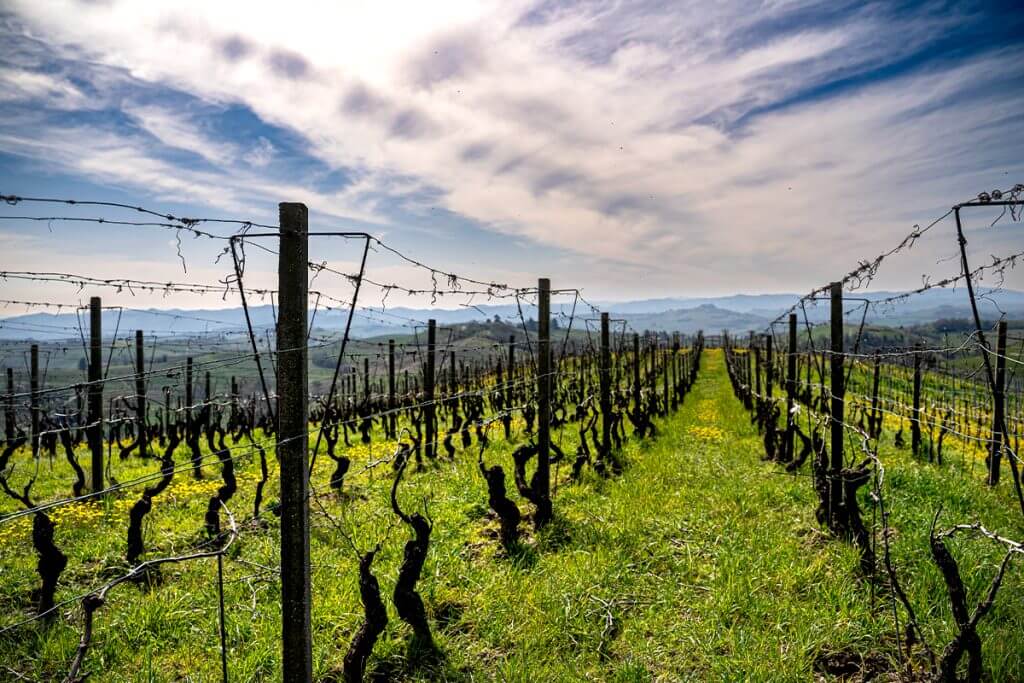
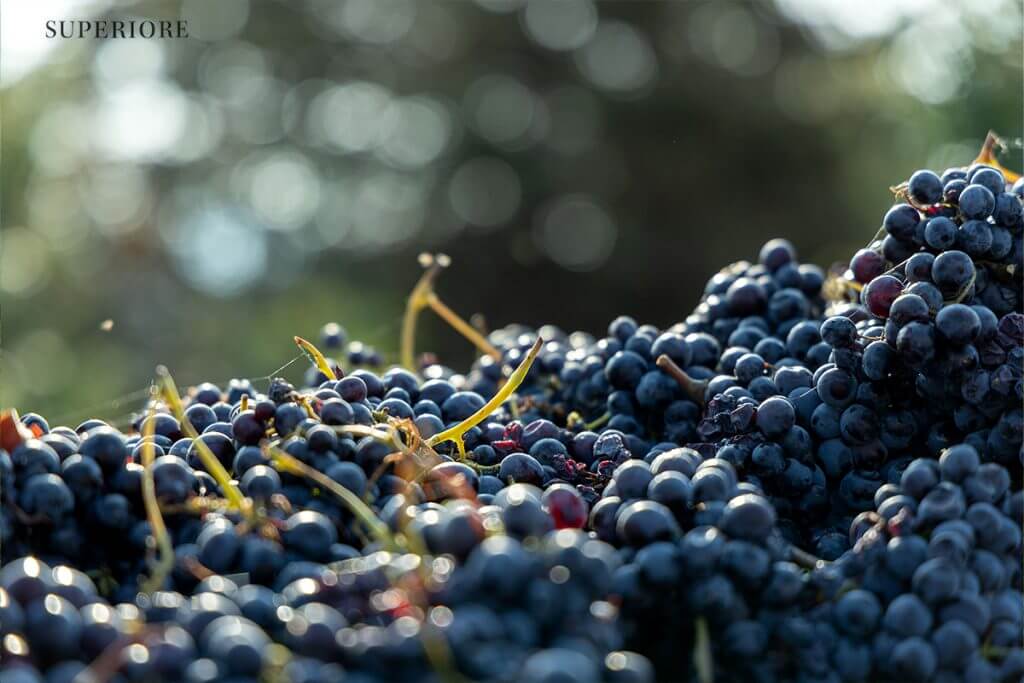
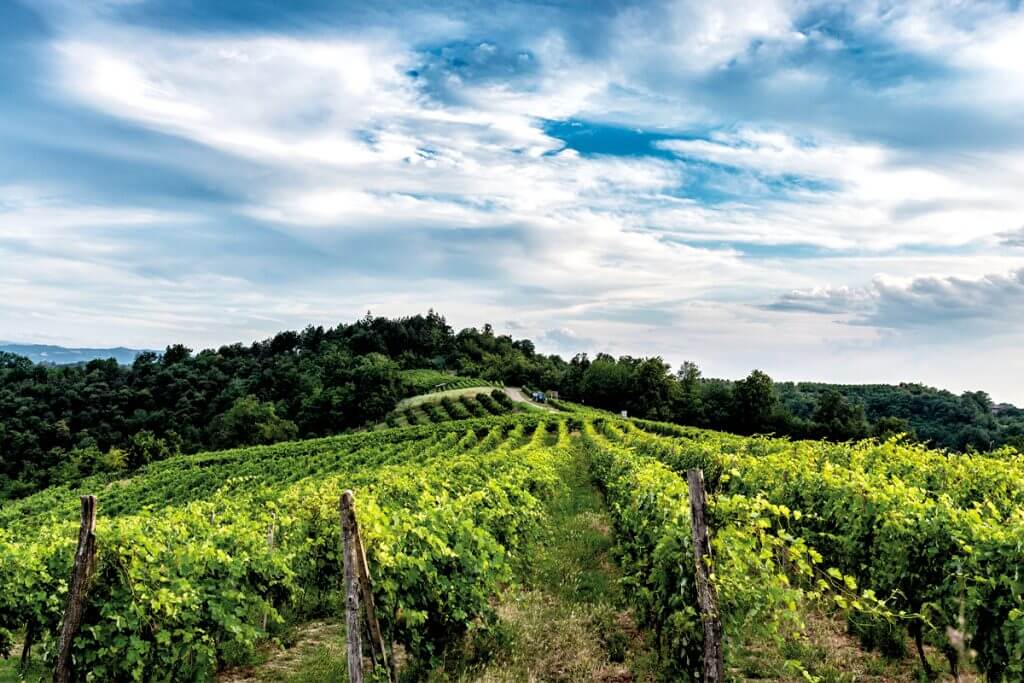
It all starts in the vineyard. After thinning and careful selection, the grapes come from vineyards that are over 30 years old, where they are harvested by hand in the morning and delivered to the winery in the afternoon, ensuring the bunches remain in optimal condition for the start of the winemaking process.
After destemming and crushing the grapes, the must is transferred to special temperature-controlled fermentation tanks. Alcoholic fermentation with maceration lasts 7–8 days at a constant temperature of around 24 °C to best extract the grape variety’s aromas; during maceration, automatic pumping-over is carried out periodically to extract the polyphenolic compounds present in the skins.
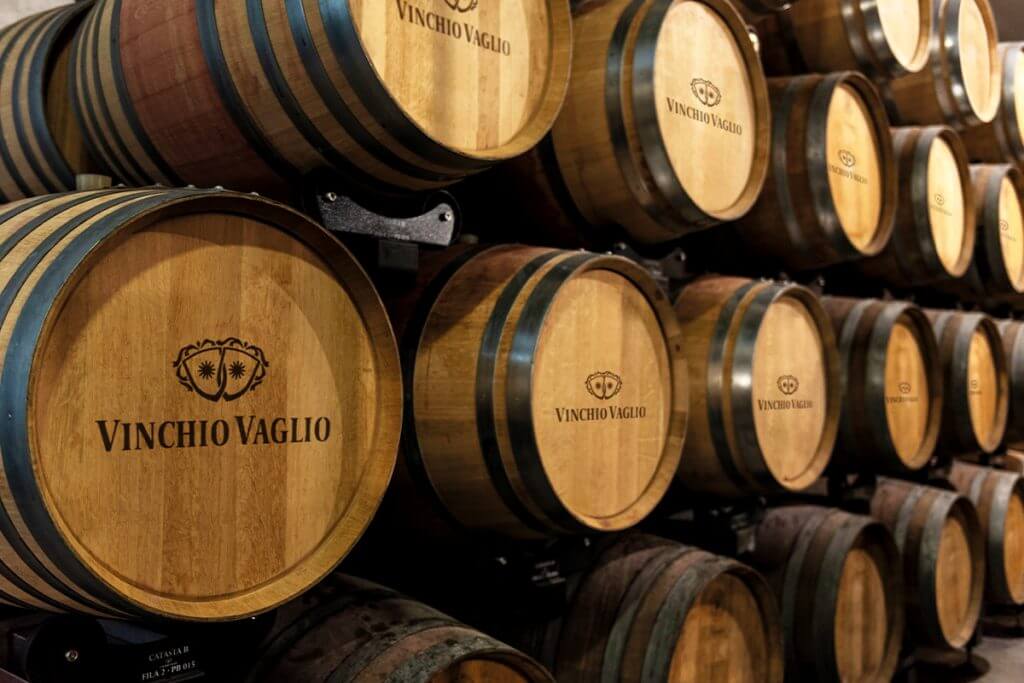
Once alcoholic fermentation is complete, malolactic fermentation begins immediately in stainless steel tanks at a temperature of 18 °C. Once this is finished, the wine is refined inside 75-hectolitre French oak barrels, where it is aged for approximately 12 months.
After resting for a month in stainless steel, the wine is finally bottled, where it is aged for a further 6 months before release.
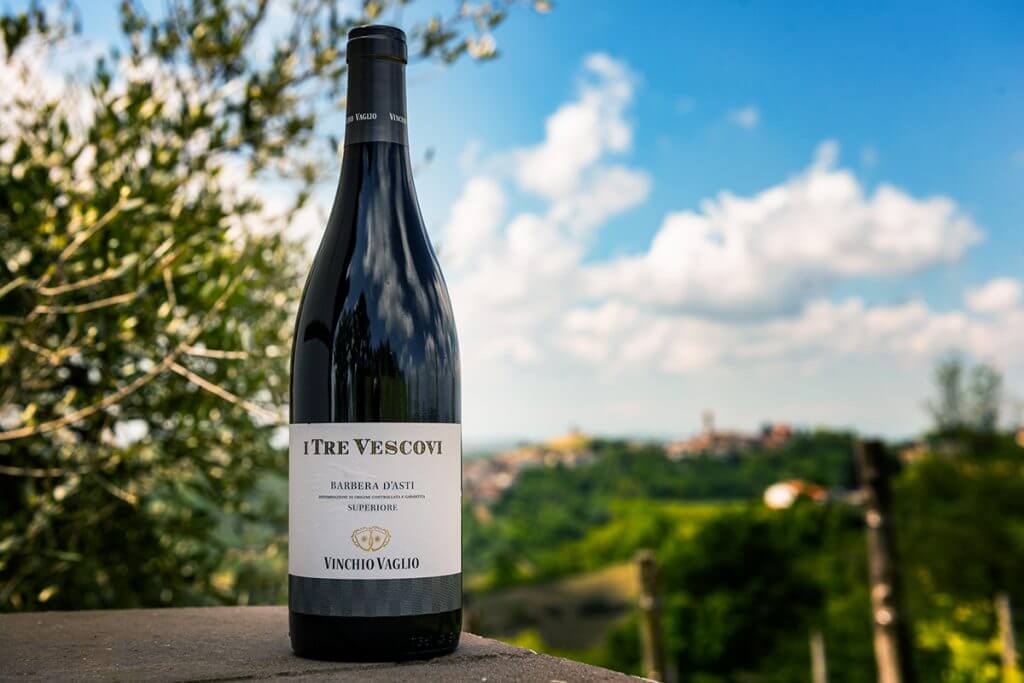
Why “I Tre Vescovi” (i.e. The three bishops)?
The name “I Tre Vescovi” is connected to a specific spot in our Monferrato region: the Bricco dei Tre Vescovi – a place where the borders of the dioceses of Asti, Acqui Terme and Alessandria meet. It was here that the respective bishops once gathered to discuss the affairs of their estates and their respective borders, amidst a historic atmosphere of rivalry.
A crossroads of jurisdictions, histories and diverse influences that coexisted in the same space. A point of contact, certainly, but above all a difficult place to manage where, according to tradition, the three bishops preferred to discuss matters over a glass of fine Barbera, which has always been renowned for its conciliatory qualities.
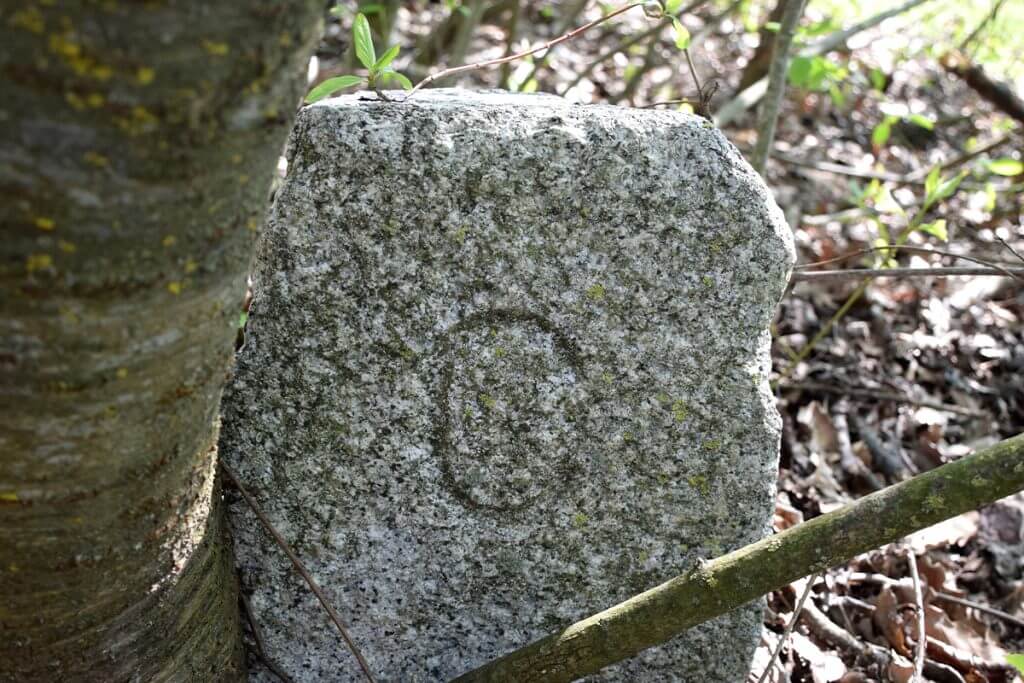
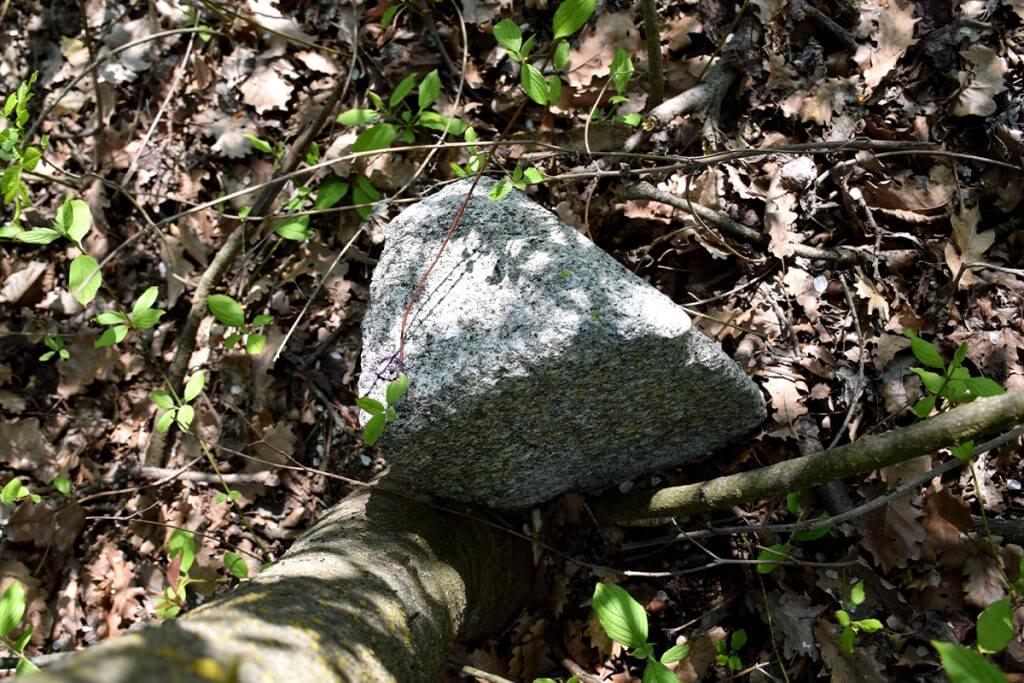
Even today, on this hillock, there is a stone with the initials of the neighbouring municipalities engraved on three sides, to serve as a neutral meeting place.
It is from this image that the wine’s name comes from: three identities that meet, touch, and influence one another. An idea that, after all, is not so far removed from what happens in the vineyard, where soil, climate, and human labour come together to find a synthesis.
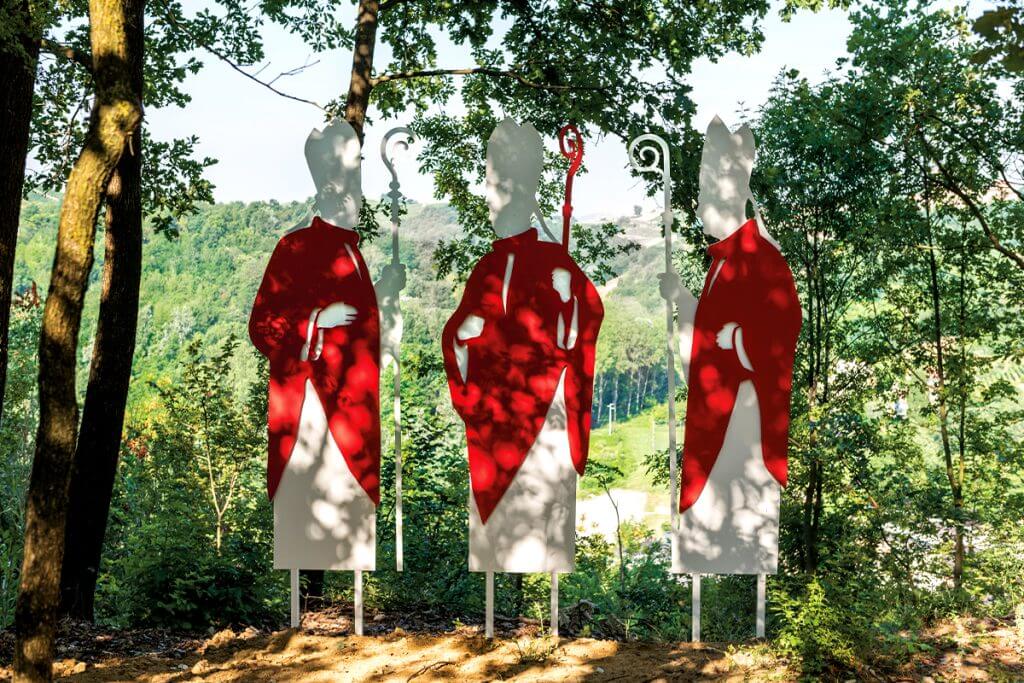
To make this connection with the territory even more tangible, we have also created a sculpture dedicated to the Three Bishops along the ‘Nidi’ trail. Not merely a symbolic element, but rather a tangible sign, a physical landmark that tells this story to those who traverse the hills to experience the landscape through wine as well.
I Tre Vescovi Barbera Superiore: the essence of a wine with a distinct identity
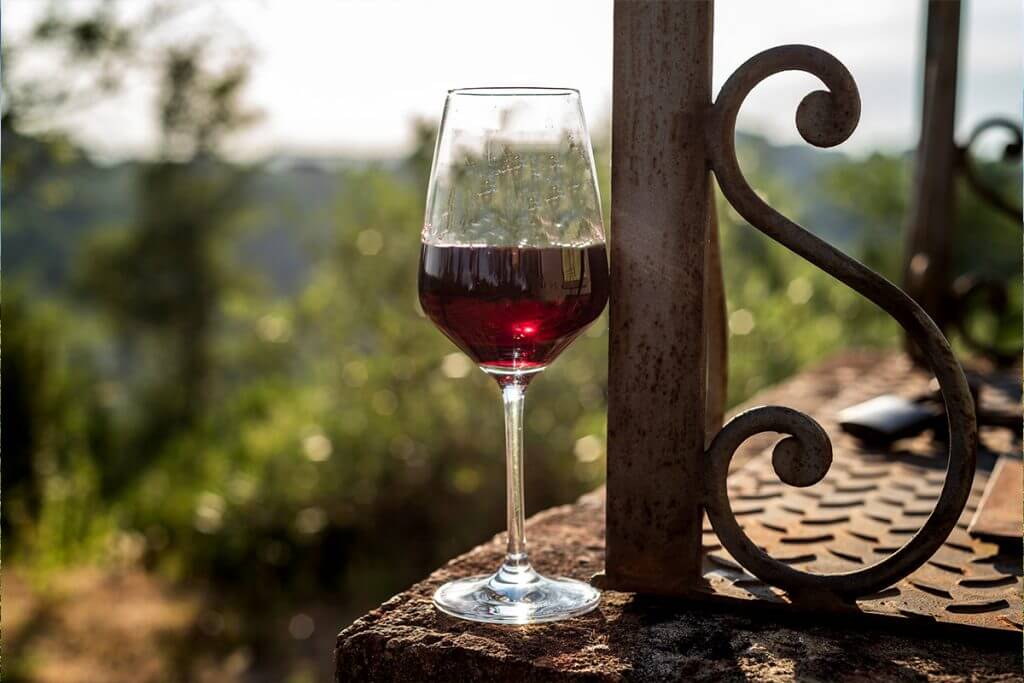
When poured into a glass, “I Tre Vescovi” displays an intense, deep colour. On the nose, distinct aromas emerge, in which the fruity character typical of Barbera intertwines with more developed notes, creating a complex yet always approachable, pleasant and harmonious profile.
A Barbera wine that reveals an extraordinary balance between fruit, acidity and structure, and which invites discovery through its modernity and versatility.
“I Tre Vescovi” is not merely one of the winery’s labels. It is a wine that embodies our very approach to winemaking.
At the heart of this project lies the idea of enhancing the grape variety without distorting it, of working on the finer details without losing the connection to the terroir, and of building quality without taking shortcuts. It was, in fact, one of the first projects to effectively combine the values of the “terroir” and the winemakers’ expertise with the aim — fully accomplished, given the results — of producing a high-quality wine that is easy and pleasant to drink, yet at an affordable price.