



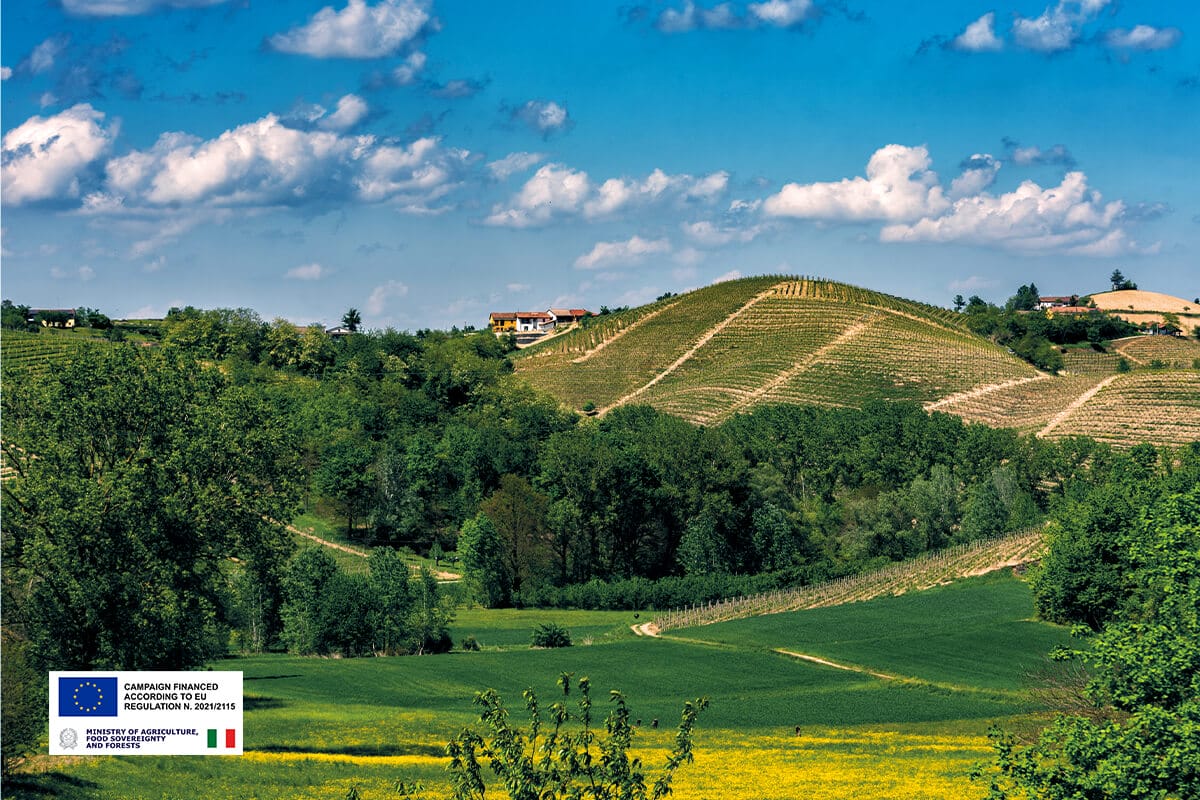
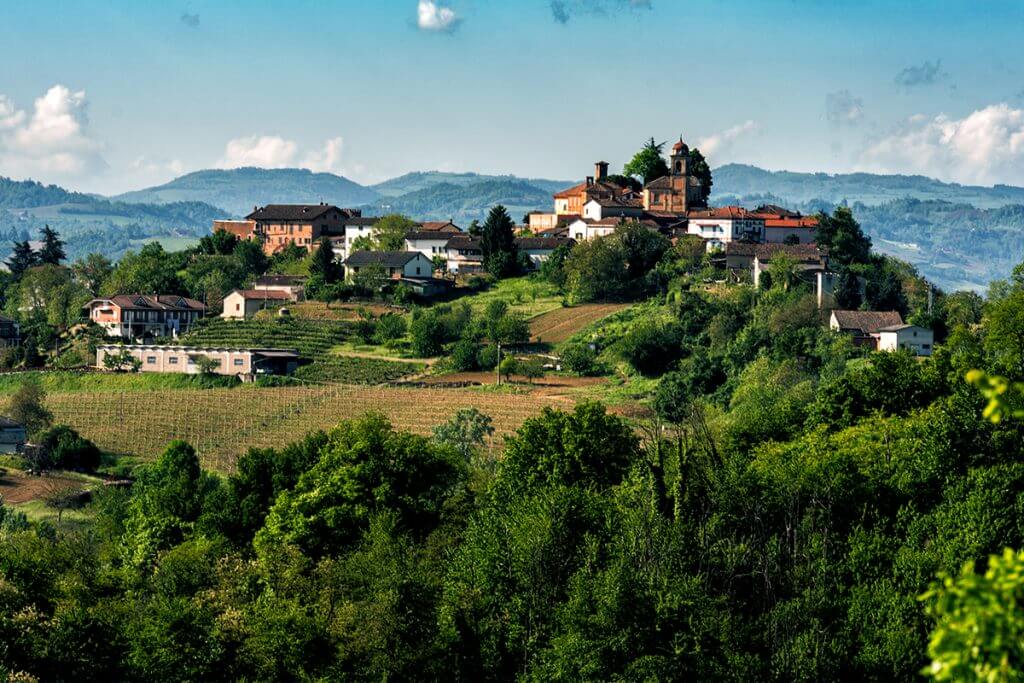
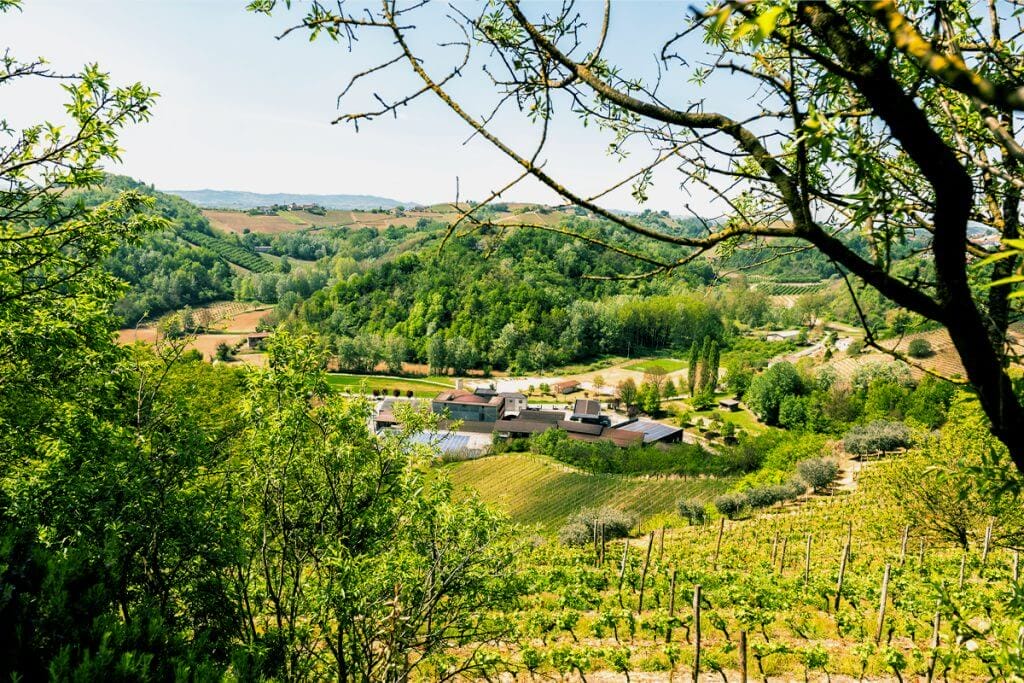
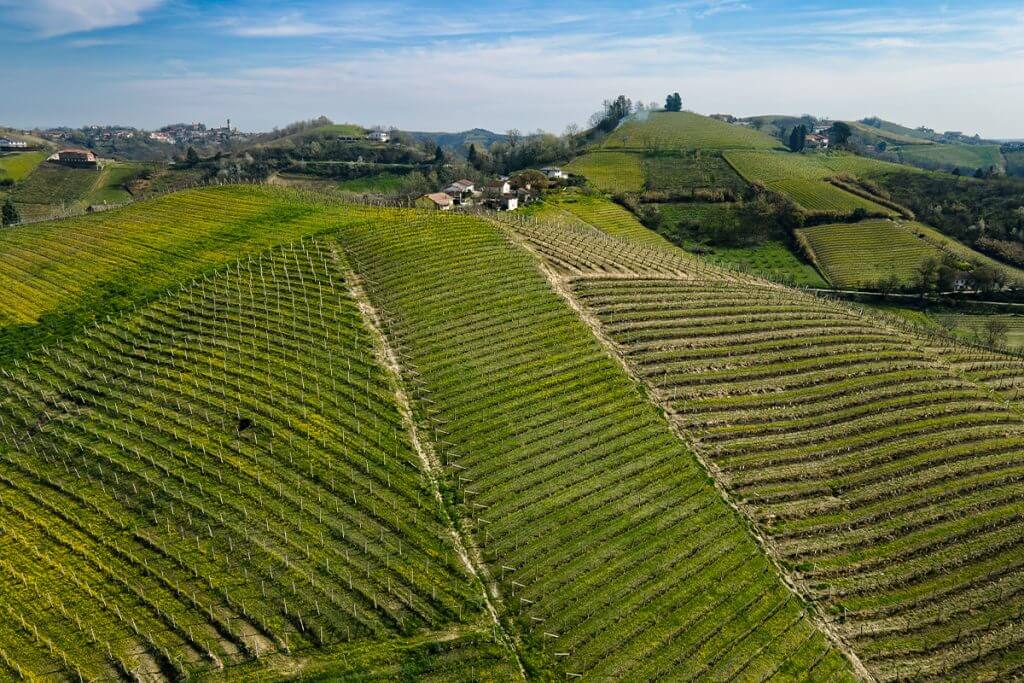
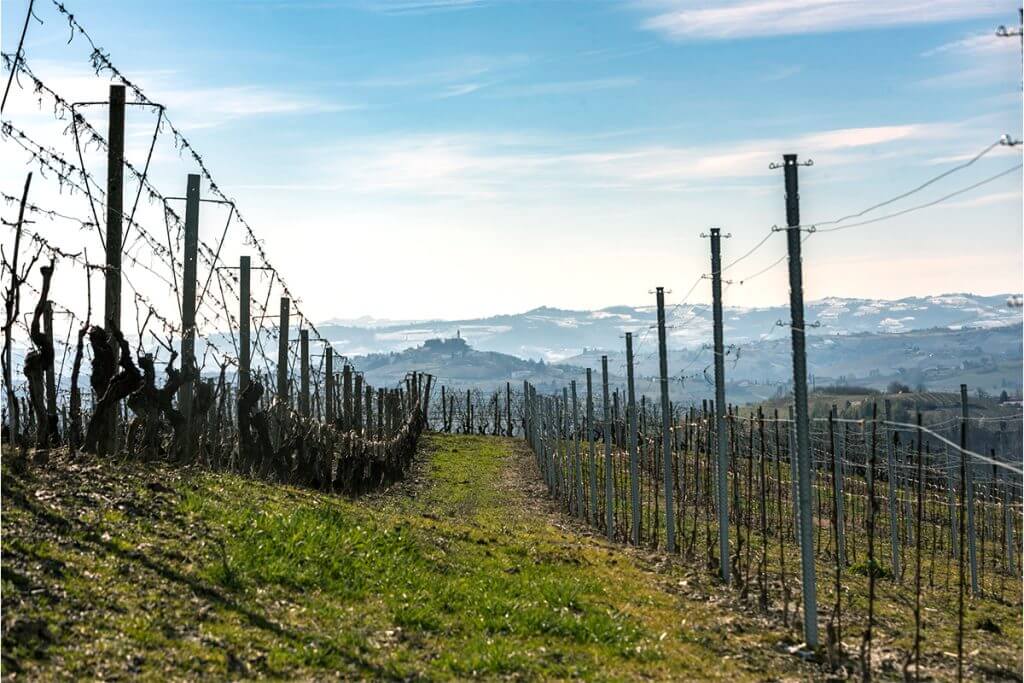
Those visiting Monferrato for the first time are often taken aback, as they expect orderly expanses of vineyards, rows of vines stretching out endlessly, hills entirely ‘smoothed’ by human hands. But this area is not just about vineyards, and the monotony of the landscape gives way to patches of woodland, tree-lined ridges and wilder areas that seem to defy any notion of commercial production.
It is precisely in this alternation that one of the most authentic aspects of our territory lies hidden: Monferrato is not just neat, tamed rows of vines. It is a constant balance between what man cultivates and what nature creates.
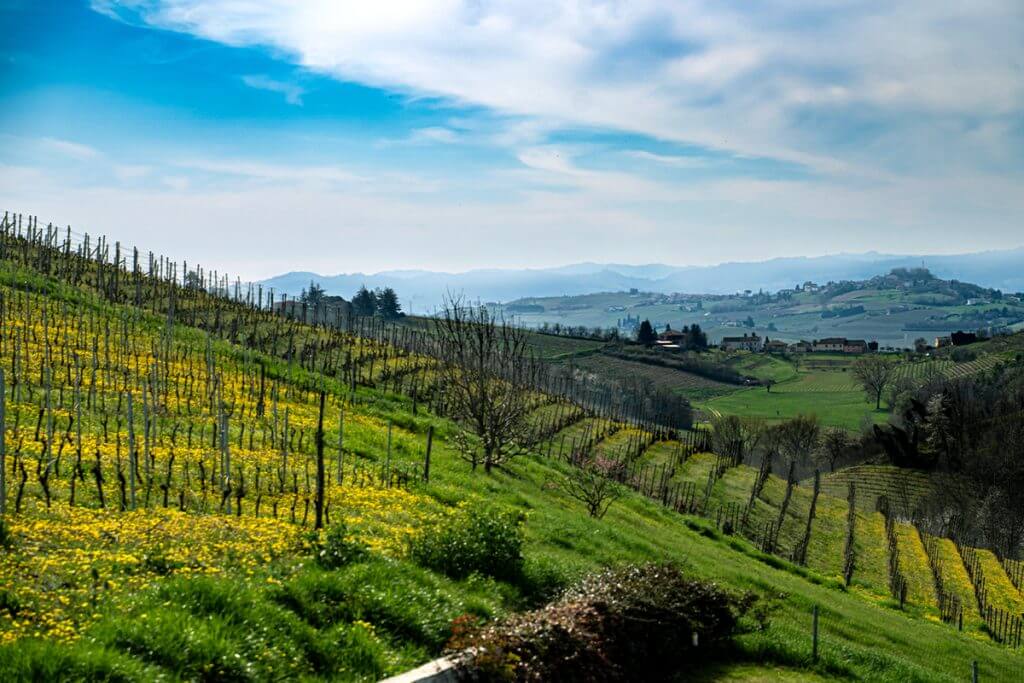
The forest of Val Sarmassa: the living memory of the region
In our landscape, woodlands have never been just empty spaces. They have always been a resource, a tangible presence in everyday life. They are the wood that heats our homes, the trails trodden for generations, and the traditions, legends and stories that shape the complex identity of this region.
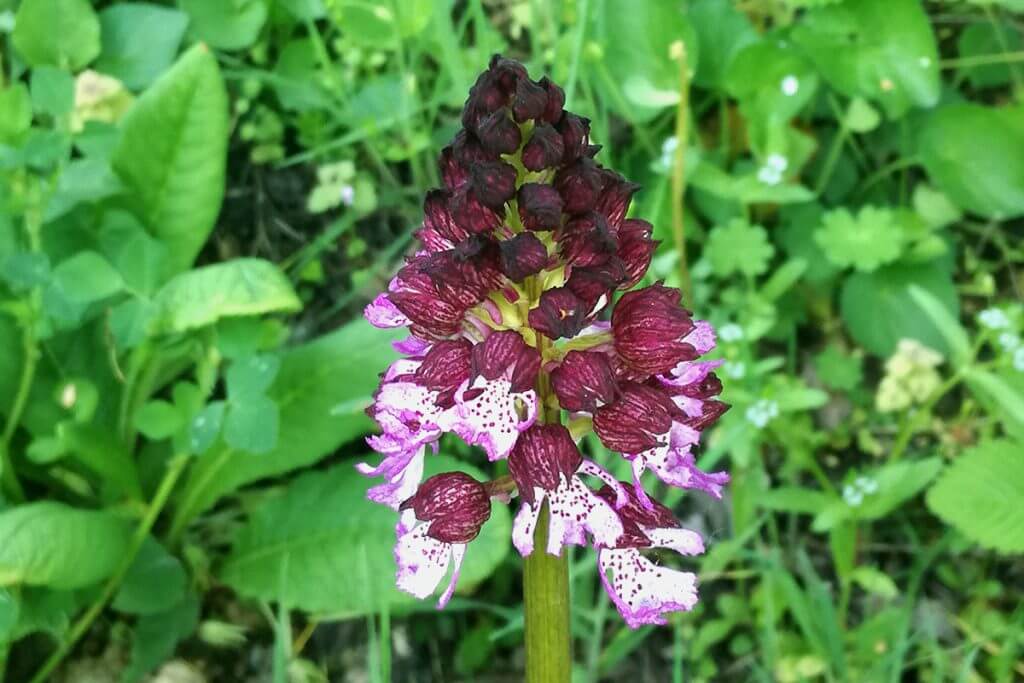
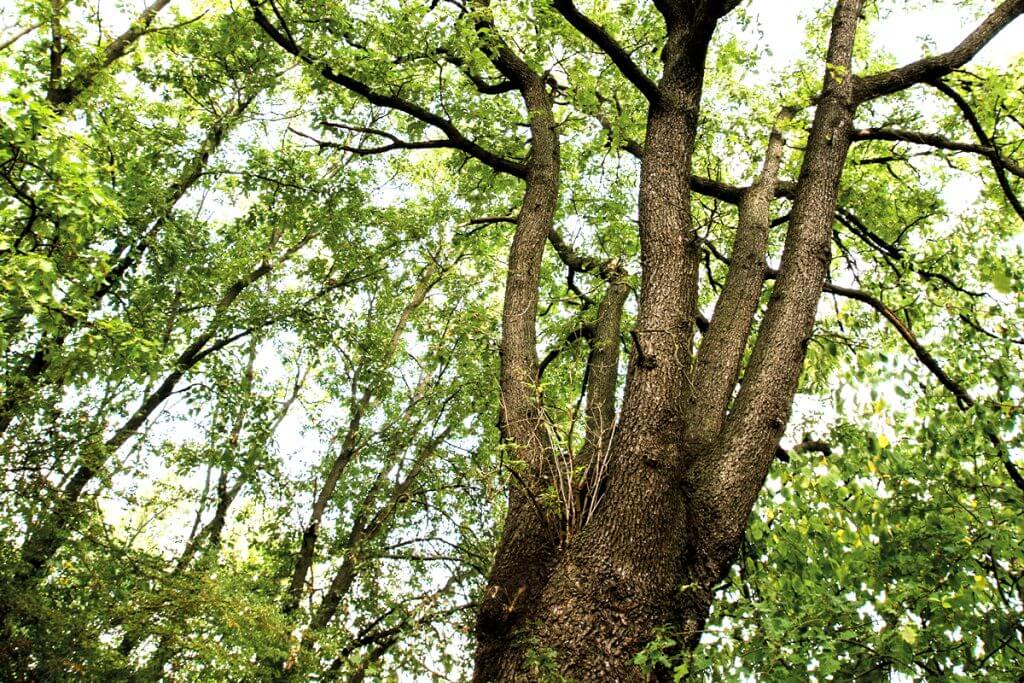
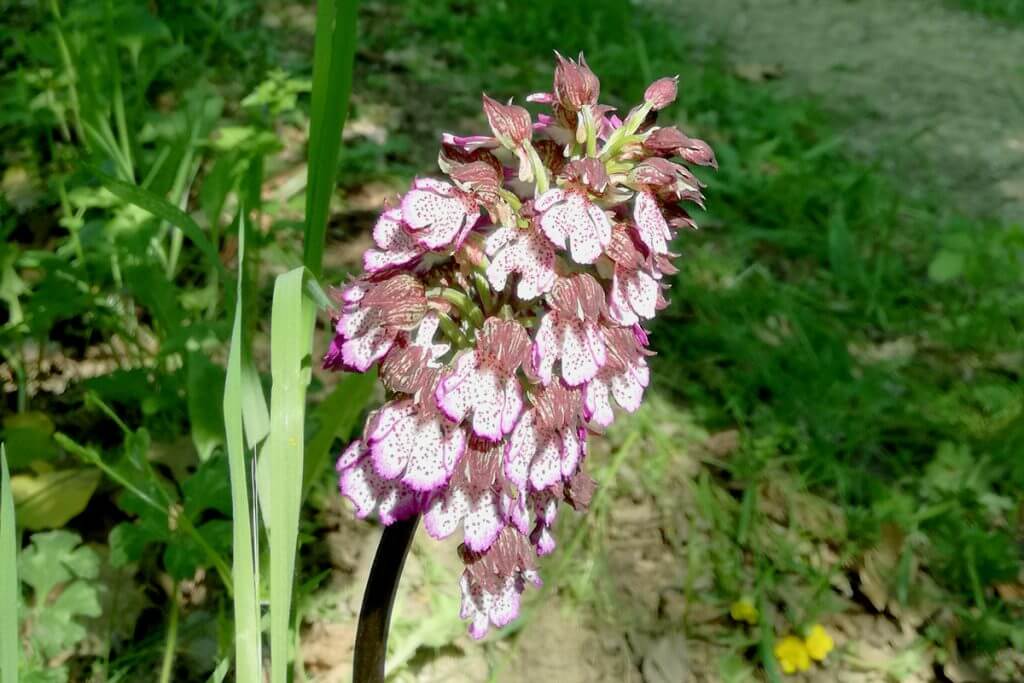
It is the locust trees blooming with clusters of white, fragrant flowers, attracting bees. It is the ancient oaks beneath which, for those who know where to look, lies one of the region’s most precious treasures: the white truffle. And it is the underbrush that, in spring, fills with lily of the valley and wild orchids, among them the Orchis purpurea, discreet and surprising.
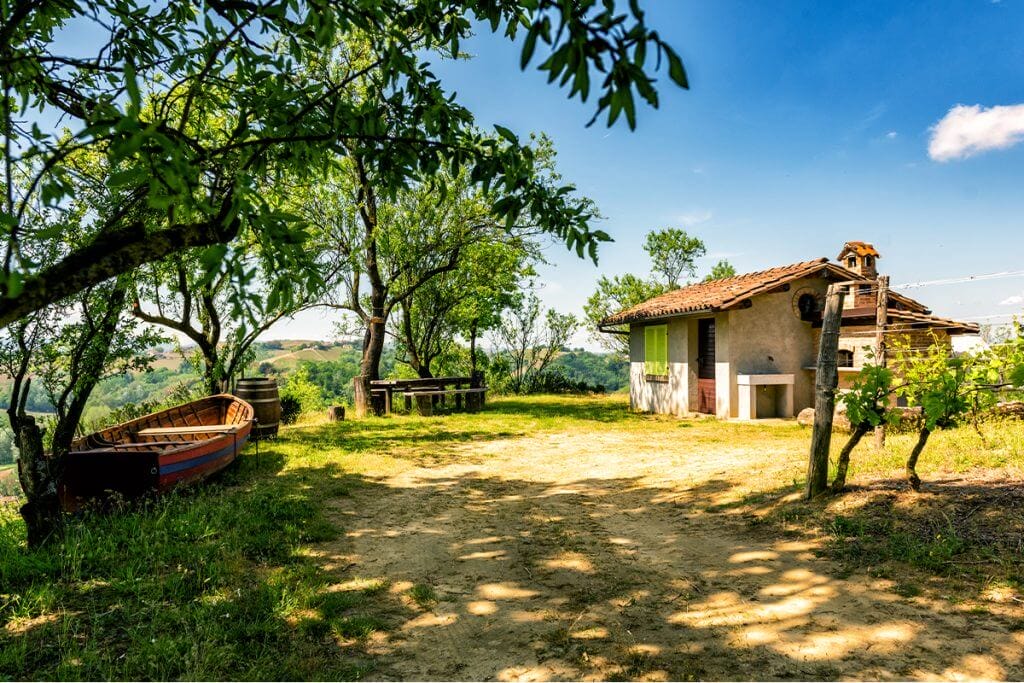
It is the casotti, small rural structures that dot the landscape and tell of a time when every patch of land had a specific purpose.
And it is within this context that the Val Sarmassa Nature Reserve was established in 1993, following a long and tenacious campaign by the inhabitants of Vinchio, Vaglio Serra, Incisa and Cortiglione, as well as our winery. After a 20-year mobilisation to protect the area from speculation, degradation and the designation of a landfill site, the outcome has saved a precious common heritage rich in fossil deposits and biodiversity.
Today, this area symbolises this balance between vineyard and woodland, with the aim of preserving not only the landscape but also the biodiversity that inhabits it.
A balance to be forged, day by day, in the name of biodiversity
Yet, if you ask a winegrower what the woodland brings to the vineyard, the answer is often far less romantic. For the woodland can also be a problem: it can become a haven for insects and pests, it can encourage the spread of diseases such as flavescence dorée, and it can encroach ever closer to the rows of vines, taking away space and control.
Despite this, the woodland in Monferrato has never been seen as an enemy, but rather as a presence to be understood, managed, contained and protected.
The winegrower’s work is not just about cultivating the vines, but also about maintaining this delicate balance: allowing the land to remain alive and rich, without compromising the work in the vineyard. An illusion? No, it is a huge task, but this does not frighten us as much as the loss of biodiversity we are seeing elsewhere.
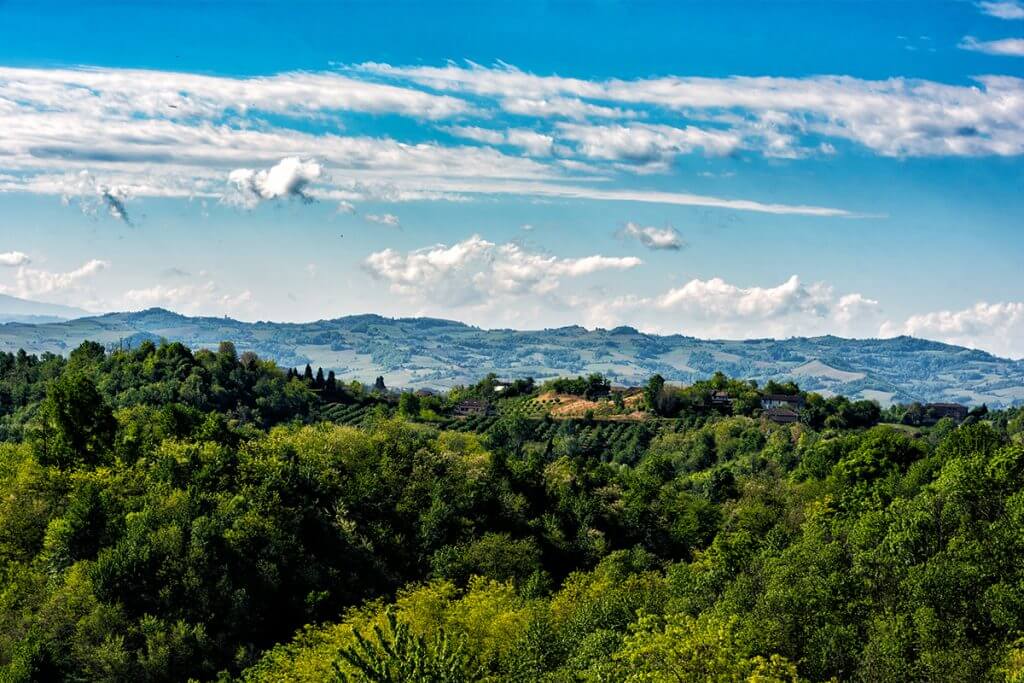
Whilst in other areas cultivation has gradually taken over every available space, here the woodlands have remained a fundamental part of the landscape.
Here the vineyards occupy the most suitable areas, whilst the woods extend across the ridges and into the less accessible areas, creating a natural continuity that defines the character of the land.
This widespread presence creates a mosaic that promotes biodiversity: wild plant species thrive in the undergrowth, wildlife moves amongst the trees, and even insects and small organisms help to maintain a complex natural balance.
It is not a ‘perfect’ landscape. It is a living landscape.
The Nidi of Vinchio Vaglio: a journey through the landscape
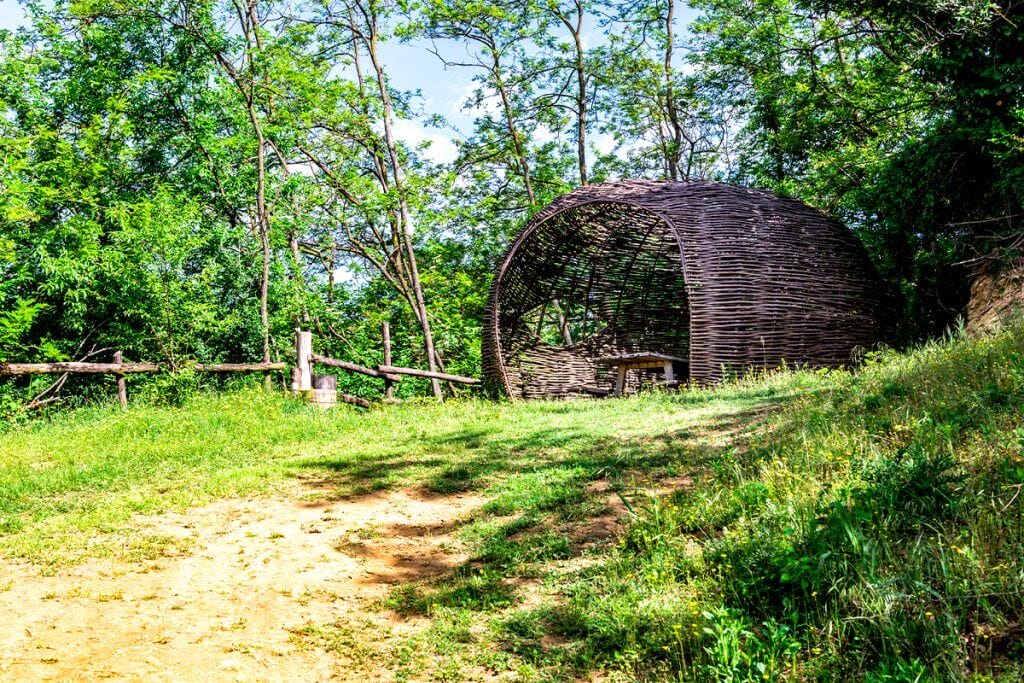
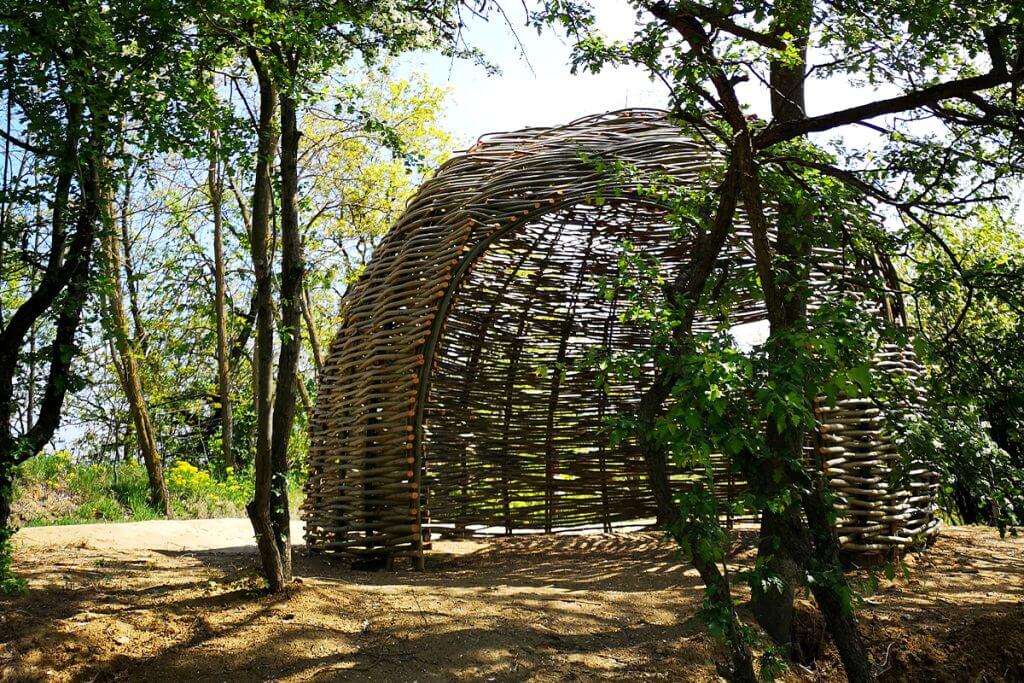
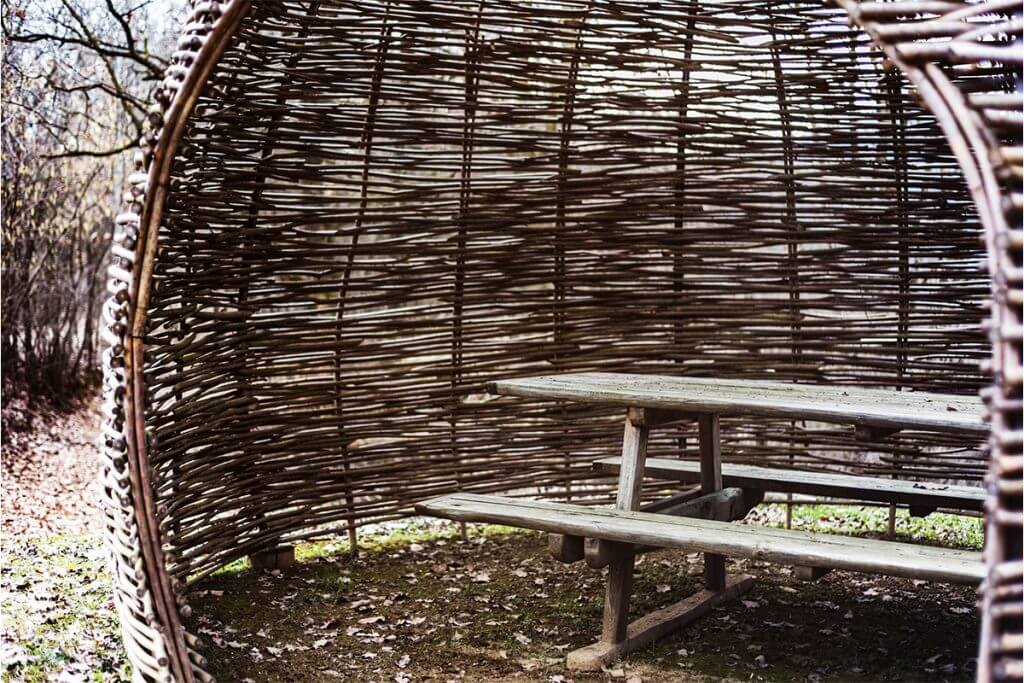
And it is from this awareness (or should we say, from this love) that the Nidi di Vinchio Vaglio project (i.e. Vinchio Vaglio’s nests) was born.
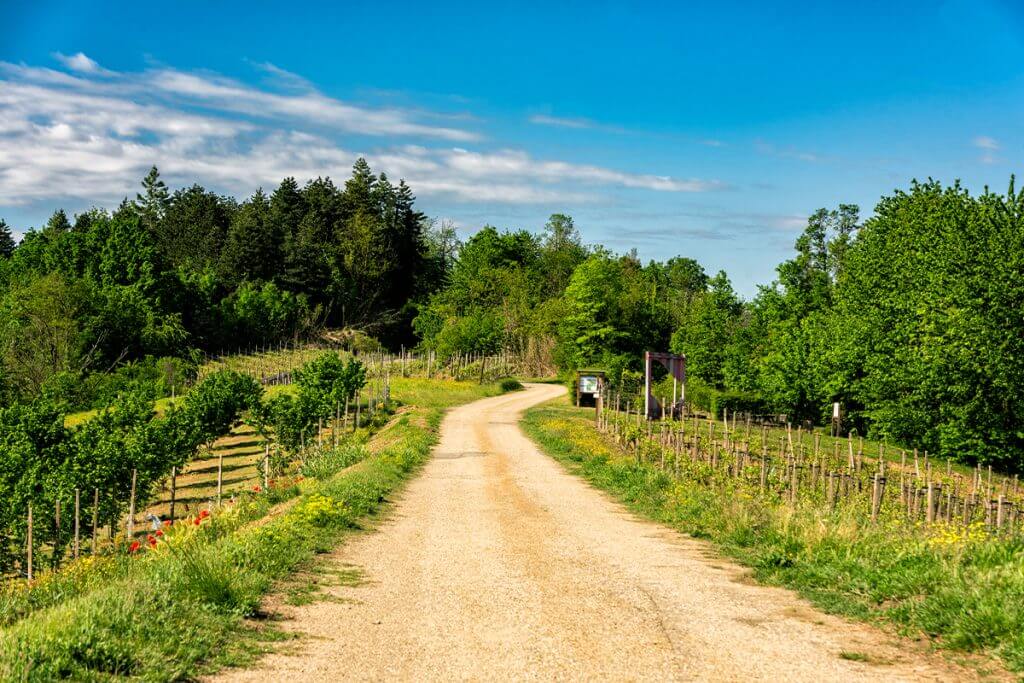
A trail that not only passes through the vineyards, but connects the two souls of the land: the ‘tamed’ soul of the vines and the ‘wild’ soul of the woodland.
Walking through the Nidi means moving from the rows of vines to the woods, observing this alternation up close, and understanding how they coexist and influence one another.
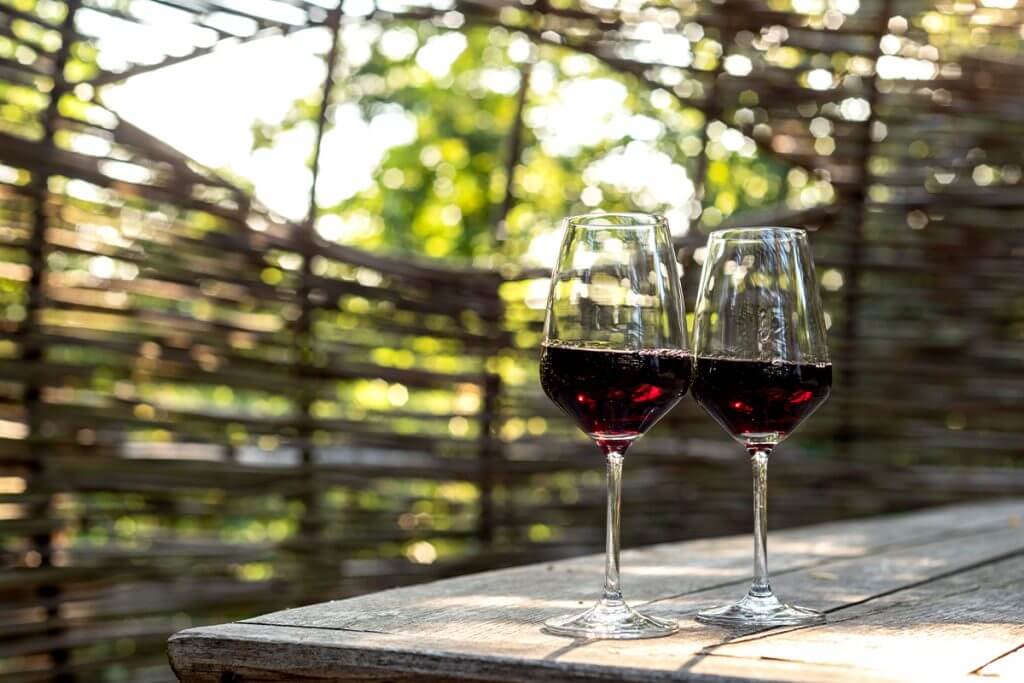
Because wine is not born solely from the vine, but from the environment in which the vine grows.
Wonderful ! DO let me know when An Event is happening @ your Winery !
Auguri
Persephone Lavinia FitzGerald